Serving Lebanon & Wilson County, TN Call (615) 555-0199
Lebanon, TN Crawl Space Specialists

Crawl Space Encapsulation in Lebanon, TN: Dry Crawl Spaces, Healthier Homes

Middle Tennessee humidity does not stay outside. It rises through open vents and bare dirt, feeds mold on joists, and pushes musty air into every room. With crawl space encapsulation in Lebanon, TN, a sealed vapor barrier, drainage, and a dehumidifier turn that damp void into a dry, controlled space your home can stand on for decades.

Licensed & Insured • Transferable Lifetime Warranties Available • ZIPs 37071, 37087, 37088, 37090 & 37136

6 Signs Your Crawl Space Needs Sealing

  • ✔ Musty odors that rise into the living space
  • ✔ Mold or mildew on joists and subflooring
  • ✔ Sagging, bouncy, or uneven floors above
  • ✔ Standing water after heavy Tennessee rain
  • ✔ High indoor humidity and fogging windows
  • ✔ Rodents and insects nesting underneath
10Foundation & Crawl Space Services
5Lebanon ZIP Codes Covered
7Middle Tennessee Cities Served
4-StepInspection & Repair Process

Quick Answer: Encapsulation seals the crawl space with a heavy vapor barrier, drainage, and a dehumidifier, cutting the moisture that causes mold, rot, and musty air. Most Lebanon homes cost $5,500-$12,000 for a full system, and the inspection is free.

The Problem Under Your Floor

Why Does a Lebanon Crawl Space Stay Damp All Year?

Lebanon crawl spaces stay damp because the ground and the climate work together against them. The expansive clay under most Wilson County homes holds water like a sponge after rain, and a bare dirt crawl space floor gives that moisture a direct path upward. Open foundation vents, which were standard when most of these homes were built, were supposed to dry the space out. In Middle Tennessee they do the opposite: warm, humid summer air flows in through the vents and condenses on the cooler ducts, pipes, and joists inside.

Once the cycle starts, it feeds itself. Wet fiberglass insulation between the joists sags, holds moisture against the wood, and loses its insulating value. Joists and sill plates stay damp for months at a time, which is exactly the condition mold and wood-decay fungi need. In winter and spring, heavy rain saturates the clay and can leave standing water on the crawl space floor for days after a storm, especially in lower ground near Bartons Creek and along Highway 109.

The damage does not stay below the floor. Warm air rises through the house and pulls crawl space air up with it, so mold spores, musty odors, and damp air from the void end up in the rooms where your family lives and sleeps. Floors over a wet crawl space sag as joists soften, doors start sticking, and energy bills climb because the home is fighting humidity it cannot win against. Encapsulation breaks this cycle at the source: seal the ground, control the air, and the crawl space stops being the wettest room in the house.

Warning Signs

Signs Your Crawl Space Is Failing

Most crawl space damage is invisible from the living room. These are the signs that show up upstairs and around the house when the space below is staying wet.

Musty Odors Upstairs

A damp, earthy smell in the living room or bedrooms that air fresheners never fix usually starts below the floor. Crawl space air rises into the house all day, carrying mold spores and musty odors with it.

Mold on Joists and Sills

Dark staining or fuzzy growth on floor joists, sill plates, or subflooring means the wood has stayed damp long enough for mold to take hold. Left alone, it spreads across the framing and weakens it.

Sagging or Bouncy Floors

Floors that dip, bounce, or slope often trace to rotted support posts and softened girders in a wet crawl space. The framing is losing its strength from the bottom up, not from age alone.

Standing Water After Rain

Puddles or a muddy floor in the crawl space after storms mean water has nowhere to go. Standing water raises humidity, accelerates rot, and turns the crawl space into a breeding ground for pests.

High Indoor Humidity

Fogging windows, warped hardwood, and a sticky feeling indoors point to moisture rising from below. A wet crawl space can push a whole home's humidity above comfortable levels, even with the air conditioning running.

Pests Under the House

Rodents, termites, and insects are drawn to damp, dark crawl spaces. Wet wood is easier for termites to eat, and standing water gives mosquitoes and roaches a place to breed under your floor.

The Full System

Crawl Space Waterproofing Lebanon TN: Drainage First, Sealing Second

Encapsulation is not just a plastic sheet on the floor. A sealed crawl space is a system, and the order of the work matters. Waterproofing comes first, because a vapor barrier laid over a drainage problem just traps water behind the liner. The inspection starts outside: grading that slopes toward the house, downspouts that dump at the foundation, and low spots where rain collects are all fixed or routed away before anything is sealed.

Inside, an interior drainage channel carries any water that still enters to a sump basin, and a sump pump moves it out and away from the foundation. Only then does the sealing begin. Vents are closed and sealed, the walls and piers are wrapped, and the floor liner is sealed at every seam and penetration so ground moisture has no path into the air. A dehumidifier sized for the space holds relative humidity in the dry range year-round, including through the humid Tennessee summer.
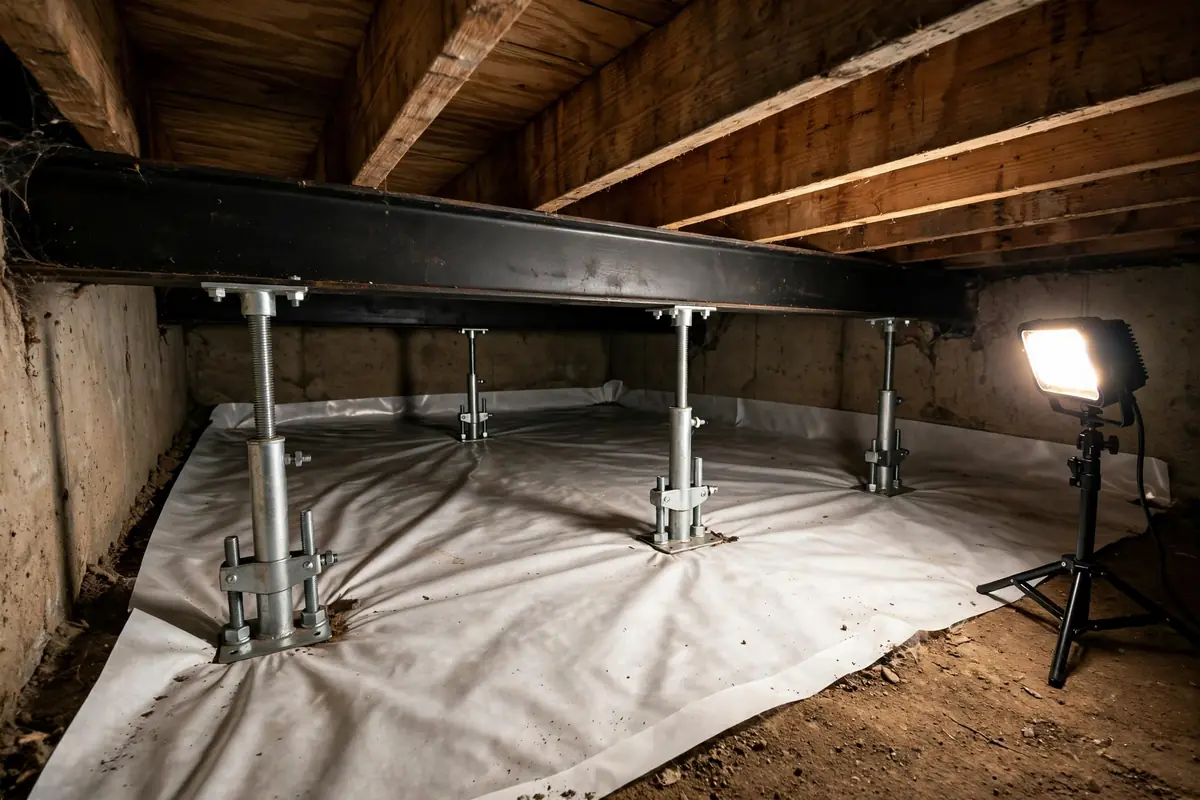
Steel support jacks and vapor barrier inside a Lebanon, TN crawl space

Steel support jacks and a sealed vapor barrier inside a Lebanon, TN crawl space.

The crawl space vapor barrier Lebanon homes need is a thick, reinforced liner sealed at every seam and pier, not the thin sheeting sold for ground cover. It runs up the foundation walls and is fastened and sealed so moisture cannot edge around it. Where joists or sill plates are already rotted, that framing is repaired or reinforced first, and settled piers are replaced with adjustable steel jacks, so the sealed space rests on sound structure. The result is a crawl space you can walk through in dry shoes, with wood that stays dry and air that stays clean.

One honest note: encapsulation does not fix a foundation that is settling. If the inspection finds piers sinking or walls moving, that structural work belongs in the same plan, because sealing a moving foundation just hides the movement. The written evaluation says plainly which problems are moisture, which are structural, and which are both, so you are paying for the right repair.

How It Works

From Damp Void to Dry, Sealed Space

Four steps, in the same order on every job. You know what happens next before it happens.

1

Free Inspection & Moisture Reading

We walk the crawl space, measure moisture and humidity, check joists, sills, and piers, and trace where water is entering, so the plan fits your home's actual moisture load.

2

Written Plan & Exact Price

You receive a written evaluation: the moisture sources, the drainage and sealing work recommended, and what each part does, with an exact price, before any work is scheduled.

3

Drain, Seal & Dry

Drainage and sump work go in first, then the sealed liner, closed vents, and dehumidifier, with any rotted framing repaired along the way. The system is tested before we leave.

4

Document & Monitor

Work areas are restored, and you keep the full record: moisture readings, the system layout, and the repair plan, for your home's file and for future buyers.

2026 Pricing

Crawl Space Encapsulation in Lebanon, TN: 2026 Cost Guide

Every home requires a free on-site measurement to determine exact repair needs, but these typical price ranges help Lebanon homeowners plan ahead:

Repair Service Common Problem Solved Estimated Price Range
Full Crawl Space Encapsulation Chronic moisture, mold, and wood joist decay $5,500-$12,000
Sealed Vapor Barrier Only Damp dirt floor, mild mustiness, no standing water $1,500-$4,000 typical
Crawl Space Dehumidifier (Installed) Persistent humidity, condensation on ducts and joists $1,200-$2,500 typical
Interior Crawl Space Drainage Standing water after heavy rain $2,500-$6,000 typical
Crawl Space Steel Support Jacks Bouncy floors, sagging girders, rotted wood piers $1,500-$4,800

Ranges marked typical are widely published U.S. averages for planning. Your exact price comes from the free on-site measurement, which accounts for crawl space size, access, drainage needs, and framing condition.

Local Ground, Local Housing

Why Lebanon Crawl Spaces Fail the Way They Do

Lebanon's postwar neighborhoods are crawl space territory. The mid-century homes across Wilson County were built with vented crawl spaces and bare dirt floors, which was standard practice at the time and a moisture trap in this climate. Decades of humid summers have worked quietly on those joists and sills, and many of the homes now show the same pattern: musty air, sagging floors, and framing that has softened from below.

The soil makes it worse. Expansive Middle Tennessee clay holds water against foundation walls and under the floor, and the karst limestone beneath Lebanon drains unevenly, so one corner of a lot can stay wet while another stays dry. Low ground near Bartons Creek and along the Highway 109 corridor is especially prone to standing water after the heavy spring storms that roll through Wilson County. A crawl space system designed for Lebanon has to account for all three: the clay, the humidity, and the rain.

Mid-Century Crawl Space Homes

Postwar Lebanon homes were built with vented crawl spaces and dirt floors. After decades of humidity, their joists, sills, and support posts are the first places moisture damage shows.

Clay That Holds Water

Expansive clay stays saturated long after rain stops, pressing moisture against foundation walls and keeping crawl space floors damp for weeks at a time.

Humid Summers, Wet Springs

Middle Tennessee humidity condenses on cool crawl space surfaces all summer, while spring storms saturate the ground. Both seasons feed the same mold and rot cycle.

Questions, Answered

Crawl Space Encapsulation Questions, Answered

How much does crawl space encapsulation cost in Lebanon, TN?

Full encapsulation for a Lebanon home typically runs $5,500 to $12,000, depending on the size of the crawl space, how much drainage work is needed, and whether a dehumidifier and sump pump are included. A sealed vapor barrier alone, without drainage or dehumidification, typically runs $1,500 to $4,000. Every home needs a free on-site measurement for an exact price, because no two crawl spaces have the same moisture load.

Does encapsulation stop mold in the crawl space?

Encapsulation stops mold by removing what mold needs to grow: moisture. The sealed vapor barrier blocks ground moisture, the dehumidifier holds relative humidity below the level mold prefers, and drainage carries standing water away. Existing mold growth is cleaned and treated during preparation, before the liner goes down, so the system starts from a dry, clean surface.

How long does crawl space encapsulation take?

Most residential encapsulation projects take 2 to 4 days from preparation to final sealing. A clean, accessible crawl space with no standing water is a shorter job, while one that needs drainage trenches, joist repair, or debris removal takes longer. Homeowners do not need to leave the home during the work.

Will encapsulation help with musty smells upstairs?

Yes, in most cases the musty smell upstairs starts in the crawl space. Warm air rises through the house and pulls crawl space air up with it, a pattern called the stack effect, so mold spores and damp odors from below end up in the rooms you live in. Sealing the ground and drying the air removes the source, and most homeowners notice the difference within days.

Keep Exploring

Related Services and Nearby Cities

Lebanon Service Guides

Nearby Cities

Ready to Dry Out Your Crawl Space?

Moisture damage gets worse every wet season, and every season of delay adds rot to the joists. Crawl space encapsulation in Lebanon, TN starts with one call: describe the smell, the damp, or the sagging floor, and get a free inspection with a written plan and an exact price.

Call (615) 555-0199 Now
📞 Tap to Call: (615) 555-0199